MENU
Get Started
U-matic was the first professional cassette video format and used by broadcasters, educators, and corporations for over two decades. With playback decks nearly impossible to find and tapes aging rapidly, now is the time to preserve what's on them.
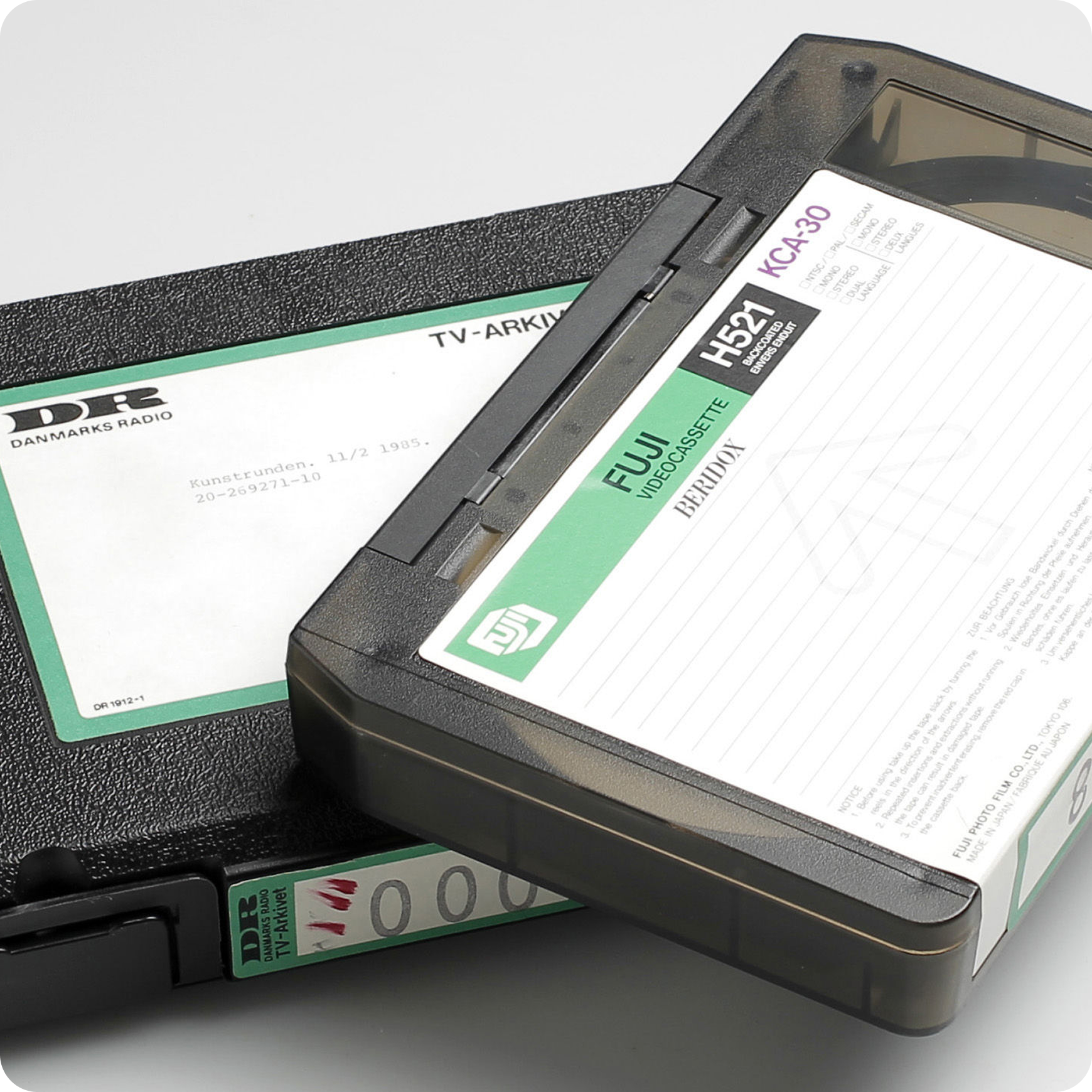
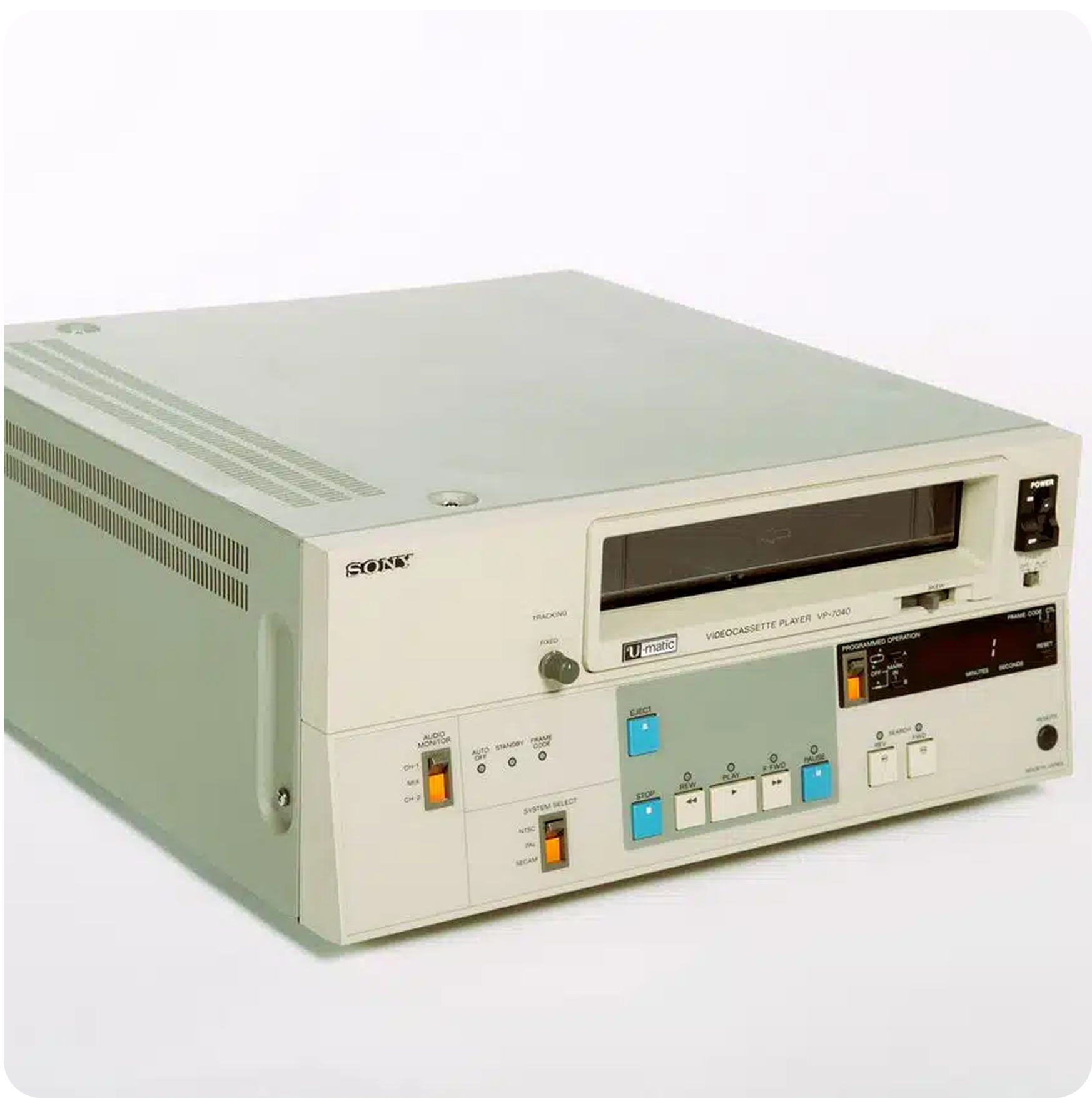
U-matic playback requires large, professional broadcast-grade decks and this equipment that is now extremely rare. At Scan5, we maintain working U-matic playback decks (including U-matic SP models) paired with time-base correctors to stabilize the signal from aging tapes and ensure the most faithful transfer possible.
Our technicians assess each tape before playback, adjust tracking and playback parameters, and monitor the transfer in real time. We capture output using broadcast-quality hardware and deliver your files in whatever format serves your needs best.
Developed by Sony and introduced in 1971, U-matic (also known as ¾-inch or 3/4-inch) was the world's first videocassette format. It became the standard for professional broadcast news, corporate video, and educational media through the 1970s and 1980s. U-matic SP (Superior Performance), introduced in the early 1980s, offered improved picture quality and extended the format's life into the 1990s.
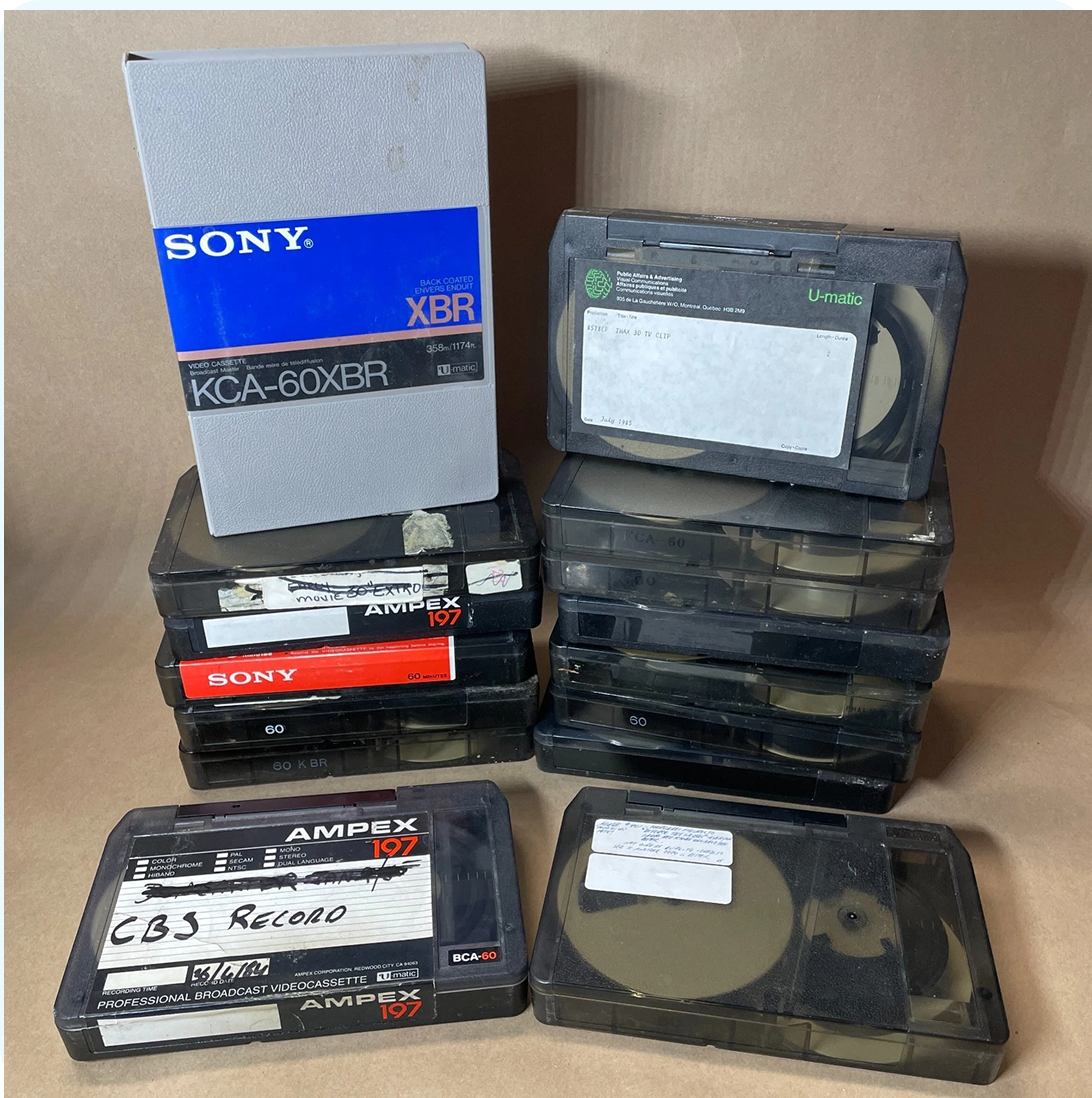
These tapes often hold irreplaceable archival content such as local news broadcasts, educational programming, corporate training videos, and cultural recordings. We accept standard U-matic (low-band), U-matic SP (high-band), and U-matic S (small cassette) in both NTSC and PAL formats.
We deliver U-matic transfers in a range of formats suited for archiving, editing, or online sharing.
Widely compatible files ideal for online sharing, institutional viewing, and digital distribution.
Professional editing formats that preserve full detail and color fidelity. Ready for use in Premiere Pro, Final Cut Pro, and DaVinci Resolve.
Uncompressed or minimally compressed files for permanent archival storage. The most faithful possible capture of the U-matic source signal.
U-matic tapes from the 1970s and 1980s are now 40–50 years old and frequently suffer from binder breakdown, mold, and oxide shedding. We take precautions with every tape before playback.

Tapes with sticky shed syndrome are carefully baked at low temperature before playback — a widely used technique that temporarily restores the binder and allows the tape to play safely through the deck without shedding onto the heads.

After transfer, we can trim, organize, and prepare your U-matic content for archival, research, or broadcast use. We accommodate institutional delivery requirements and custom file naming.
Once your U-matic tapes are digitized, we offer flexible options for how to store and access your files.


We've transferred U-matic collections for broadcasters, universities, and cultural archives across the Chicago area.

News archives, educational recordings, training videos, and corporate productions — U-matic tapes often hold content that exists nowhere else and must be preserved urgently.
We handle high-volume U-matic transfers for museums, libraries, historical societies, and universities. Contact us to discuss large-scale archival project pricing and logistics.

We understand how personal your memories are, and we treat them with the utmost care. Your photos, tapes, and videos are always secure with us, and we never share them with third parties. Your physical items are kept safe in our climate controlled inventory room at our office building with 24/7 monitoring.
We digitize standard U-matic (low-band), U-matic SP (high-band), and U-matic S (small cassette) tapes in NTSC format.
U-matic tapes are now 30–50 years old, and the format is one of the most at-risk of any video format still in circulation. Working playback decks are extremely rare and parts are no longer manufactured. Additionally, the oxide binder on tapes of this age is highly susceptible to breakdown. Every year you wait, the risk of unrecoverable loss increases.
Yes. We identify and treat tapes with binder degradation (sticky shed) by low-temperature baking before playback. This temporarily restores the tape's ability to run safely through the deck, maximizing the quality of the transfer.
We offer high-quality MP4 for viewing and sharing, ProRes and DNxHD for professional editing workflows, and uncompressed formats for archival storage. We can accommodate custom delivery specifications for institutional clients.
You can drop off at our Chicago studio at 4001 N Ravenswood Ave Suite 502-B, schedule a courier pickup, or ship your tapes to us. For large institutional collections, contact us to discuss logistics.
U-matic transfers are real-time — a 60-minute tape takes approximately 60 minutes to transfer (plus any tape treatment time). Turnaround for most projects is 1–4 weeks. Rush service may be available for urgent archival situations — contact us to discuss.
Yes. We offer volume pricing for large collections and institutional archives. Contact us with your tape count and delivery requirements and we'll provide a custom quote.
Don't wait — U-matic tapes are among the most at-risk formats in existence. Let Scan5 preserve your content now.